
From Bricks to Buyer Comms: Why Structure Matters
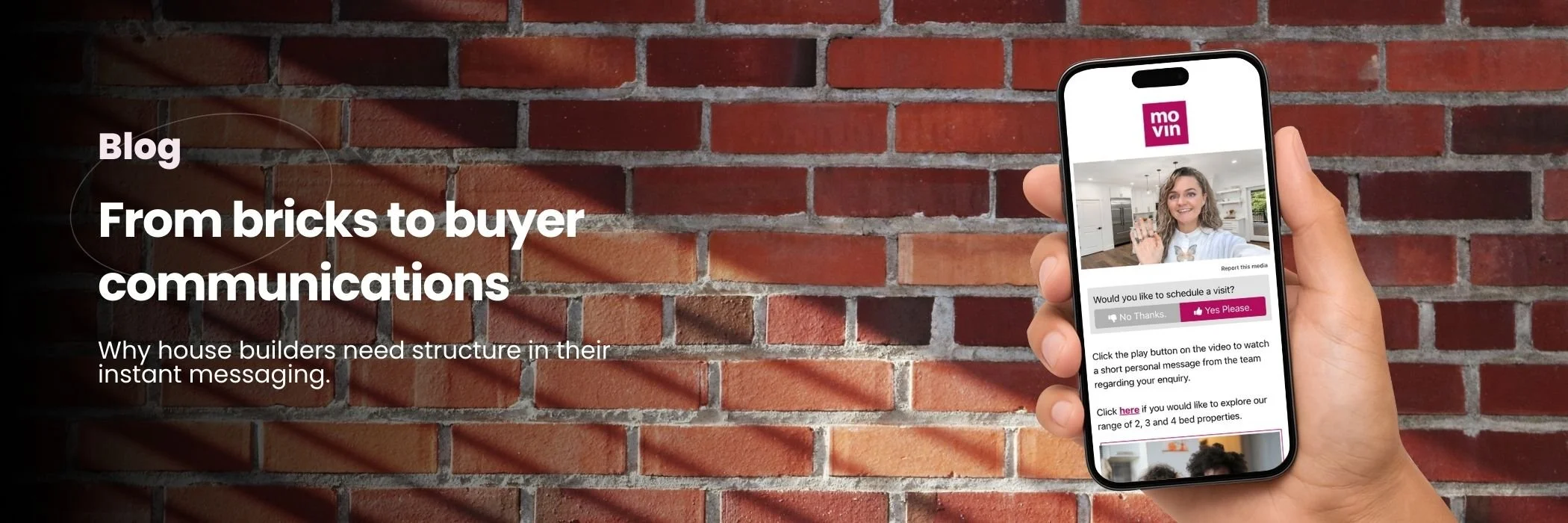
House builders don’t leave build quality to chance.
You have drawings, phases, sign-offs, site management, safety checks, and a clear process that turns plans into homes people can trust.
But when it comes to customer communications, many organisations are still relying on whatever “just happens” day to day: WhatsApps, mobile phone calls, ad-hoc videos and photos, inconsistent updates, and no central visibility for leadership.
And that’s where the cracks start to show.
Buyer demand has changed (and teams are trying to keep up)
Today’s buyers expect:
Build updates and regular communications as standard
Quick answers to questions
Video walk-throughs and progress photos
A “feel” for the development before they visit
Reassurance between reservation and completion
Sales teams are doing their best to meet that demand - sending videos, photos, voice notes, and development updates to customers every day.
That’s great… but it isn’t structured.
When there’s no structure, it gets messy fast
Without a managed, trackable approach to buyer comms, the risk isn’t theoretical - it shows up in real moments that leadership then has to clean up.
You might discover:
Someone has been signing off with “xx” or overly personal language to customers
Customer details and conversations are stored on personal devices
Content is being sent without checks (branding, tone, accuracy, compliance)
Backgrounds in videos are… not quite “show-home ready” (yes, toilet seat-up moments have happened)
Messages vary wildly by site and by person, making your brand feel inconsistent
There’s no audit trail: you can’t see what was sent, when, or what the customer replied
And then there’s the bigger operational concern:
If it lives in WhatsApp, it lives outside your process.
Which makes governance, reporting, handovers, training, and continuous improvement almost impossible.
The hidden cost: inconsistent comms hurts sales, not just compliance
Most leaders see the compliance and brand risk first (and they should).
But the commercial impact is just as important:
Slower responses = missed opportunities
Inconsistent follow-up = lost momentum and lower footfall
Poor handovers = frustrated buyers and stretched teams
No visibility = no way to coach performance
No reporting = no way to prove ROI
If you can’t see what’s happening, you can’t scale what’s working (and stop what’s not!)
Structure doesn’t slow teams down - it speeds them up
The goal isn’t to restrict sales teams.
It’s to give them a framework that makes buyer comms:
Consistent
Professional
On-brand
Compliant
Measurable
Repeatable across sites
When the structure is right, messaging becomes a sales asset - not a risk.
What “structured buyer comms” looks like in practice
A structured approach means your teams know:
1) What to send
With best-practice guidance, training and bespoke templates - designed to nurture the buyer through:
First enquiry
Reservation confirmation
Pre-completion excitement and next steps
Build stage updates
Development overviews
Plot walk-throughs
Aftercare and customer service communications
2) When to send it
Simple communication pathways aligned to your sales journey, so messages don’t rely on memory or personal style.
3) Why it matters
Because each message has a purpose - to reassure, to progress, to invite, to confirm, to convert.
When purpose is clear, performance improves.
Why sales leadership needs visibility (not just activity)
When it comes to doing instant messaging right, it’s less about quantity- and more about quality. But how do you ensure quality control when you can’t see what’s going on?
Sales Directors and Managers need to be able to:
Track and monitor communications across their sites
Report on activity and customer engagement
Gain insight into which messages drive more appointments and reservations
Have confidence that buyer comms align with brand and policy
Lean on a training framework that raises standards across the board
Without that visibility, it’s hard to manage risk - and even harder to optimise outcomes.
How Movin Technology supports structure at scale
Movin Technology gives house builders a dedicated instant messaging platform built for structured buyer communications.
That means:
A managed platform for messaging (rather than personal apps/devices)
Central visibility so leadership can track communication and customer responses
Training and best practices framework so teams know what to send, when, and why
Checked, consistent content that protects your brand and improves professionalism
Reporting that helps you coach performance and prove value
It’s the structure that turns everyday videos and updates into a consistent customer experience - while reducing risk and raising standards.
Build the homes. Build the comms structure too.
The truth is, your teams are already sending videos, photos and instant messages to customers.
The next step is to turn that activity into a governed, scalable process that improves customer experience and strengthens sales performance.
If you’d like to see what structured buyer communications looks like in practice, Movin Technology can show you how house builders are using managed instant messaging to:
Increase engagement
Drive more footfall
Secure more reservations
Support smoother completions - with visibility and control for leadership
If you want structure in your customer comms, and a framework that works, book a demo with us.
